



What could be causing your symptoms – and what should you do first?
If your eyes are feeling dry, itchy, watery or irritated, you are not alone. These are some of the most common symptoms we see in practice. The tricky part is that they can be caused by a wide range of things, from simple dryness to more complex eye conditions.
It might feel like something you can quickly fix with a bottle of drops, but in reality, irritated eyes are not always as straightforward as they seem.
Why your eyes might feel irritated
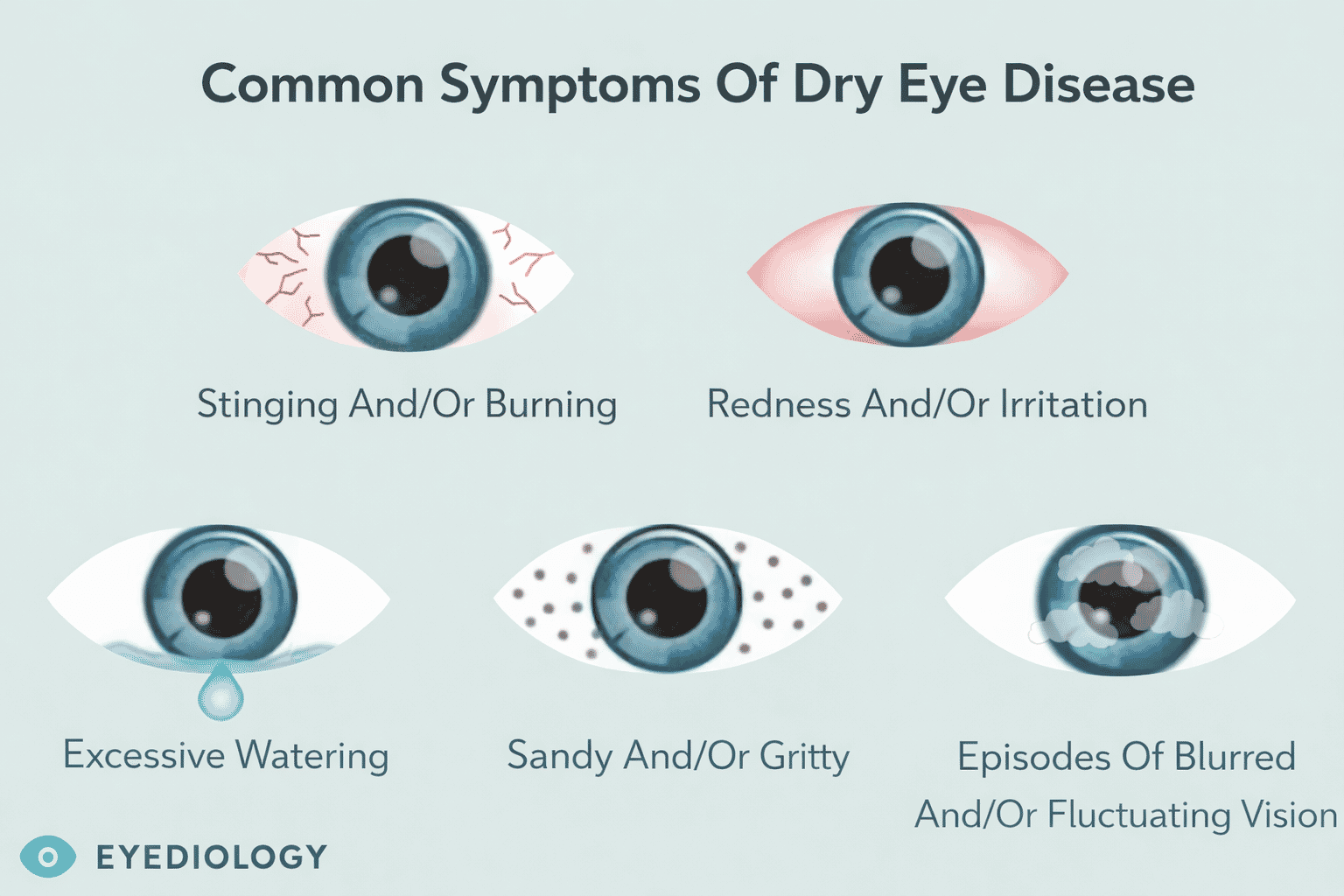
Eye discomfort often overlaps in how it presents. Dryness, watering, grittiness, redness and itching can all occur together, even when the underlying causes are different.
Some common causes include:
Dry eye disease
Allergies such as hay fever
Blepharitis (inflamed eyelids)
Meibomian gland dysfunction (oil glands not working properly)
Contact lens wear
Screen use and reduced blinking
Air conditioning or central heating
Foreign bodies or minor trauma
Early infection
This is why guessing and self-treating without proper assessment can sometimes delay the right treatment.
Understanding dry eye – the vicious cycle
Dry eye is not just about “not enough tears”. It is often a cycle that feeds itself.
When your tear film becomes unstable:
The surface of the eye dries out
This causes inflammation
The inflammation worsens tear quality
Poor tear quality leads to more dryness
And round it goes.
Breaking this cycle is key. That usually involves a combination of:
Lubricating drops
Lid hygiene
Warm compresses
Environmental changes
Sometimes dietary support
Drops alone can help, but they are only one part of the plan.
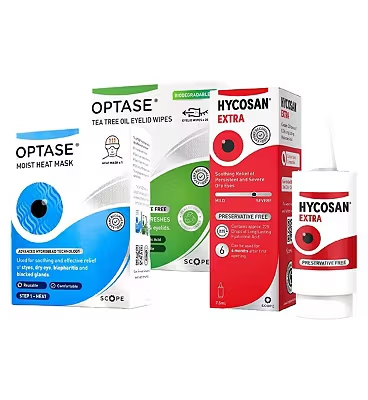
Why we recommend the Hycosan range
We often recommend the Hycosan range because:
They are preservative free
Suitable for regular use
Designed for different levels of dryness and irritation
Many are compatible with contact lenses
You can find the full range through trusted retailers such as Boots, which many people are already comfortable using. While we stock some options in practice, larger retailers can sometimes offer better pricing and availability.
Here is a simple guide to what each type is used for:
A great starting point for mild to moderate dry eye. Ideal for everyday dryness, especially with screen use. (Click to view)
Contains a higher concentration of sodium hyaluronate. Better suited for more persistent or moderate dry eye symptoms. (Click to view)
Designed for dryness with an allergic component. Helps stabilise the tear film while also supporting irritated eyes. These double action eye drops with hyaluronic acid and ectoin support relief of itchy, burning or dry eyes due to allergens. (Click to view)
A stronger version of Dual. Useful when dryness and inflammation are more significant. (Click to view)
An ointment rather than a drop. Used before bed for overnight protection, especially if you wake with dry or sore eyes. (Click to view)
Supports the lipid layer of the tear film. Particularly helpful if your dryness is linked to oil gland issues. (Click to view)
A lighter option for mild dryness or tired eyes. Good for occasional use or long days on screens. (Click to view)

Managing dry eye symptoms day to day
If you are experiencing dry eye, a simple routine can make a big difference:
Use lubricating drops regularly, not just when it feels bad
Apply warm compresses like the Optase Moist Heat Mask to support oil glands
Clean your eyelids if recommended with suitable, gentle cleansing solutions or lid wipes like Optase Tee Tree Wipes
Take breaks from screens and blink more consciously
Stay hydrated
Consider your environment, especially heating or air conditioning
Even if symptoms are mild, having drops at home is a good idea. With modern lifestyles, most of us are blinking less and exposing our eyes to drying conditions more often.
Allergies and your eyes
Allergic eye reactions are very common, especially in the UK during spring and summer.
Typical symptoms include:
Itching
Redness
Watering
Swelling
Unlike dry eye, itching is usually the key sign of allergy.
Triggers can include:
Pollen
Dust mites
Pet dander
Cosmetics
Lubricating drops like Hycosan can help wash allergens away and soothe the eye, but sometimes additional treatment such as antihistamine drops is needed.
Again, this is where an eye examination is important.
When symptoms might be something more
Sometimes irritation is linked to conditions that need closer management, such as:
Blepharitis
Meibomian gland dysfunction
Corneal abrasions
Infections
Inflammatory eye disease
In certain cases, we may refer you to hospital eye services for further investigation or treatment.
Why an eye test matters
Here in the UK, your first point of call should be your optometrist.
An eye examination allows us to:
Assess the surface of your eye in detail
Identify the cause of your symptoms
Rule out infection or damage
Recommend the right treatment plan
Without this, you are essentially guessing.
Frequently asked questions
Can my GP prescribe eye drops?
Possibly, but it is a different pathway. Without examining your eyes ourselves, we cannot comment on what has been prescribed or why. Proper assessment always comes first.
Will drops get rid of my dry eye?
Not necessarily. Drops are part of a wider management plan. Long-term control often includes lid care, compresses and lifestyle changes as well. You may even require blephex treatment, which is available at our practice alongside a Dry Eye Assessment or Eye Examination. To view our fees, please click here
I had something in my eye and it still feels sore. Can I just use drops?
Drops may help with comfort, but you need your eye checked. We need to rule out damage, infection or anything still present in the eye.
Can I use eye drops with contact lenses?
Most Hycosan products are compatible, but always check the packaging for that specific product.
My eyes are itchy. Should I just use drops?
It depends on the cause. It could be dryness, allergy or early infection. Drops may help symptoms, but they will not confirm the diagnosis. If it persists, get it checked.
Are lubricating drops safe to use daily?
Generally, yes, especially preservative-free ones like Hycosan. They can be used regularly, even without symptoms, to maintain comfort but you should stick to the lighter products rather than the intense ones to avoid wasting your money. If you use a thicker product your eye doesn’t need, you’ll simply blink it out, stick to fresh or original for general eye refreshment and Hycosan extra if you need something a little thicker e.g. you work under an air conditioning unit or heater.
But, remember, any signs or symptoms always need a professional assessment.
When should I be concerned?
Seek advice if you notice:
Pain
Light sensitivity
Sudden vision changes
Persistent redness
Discharge
Final thoughts
It is easy to underestimate eye irritation, but small symptoms can sometimes point to bigger issues.
Lubricating drops are incredibly helpful and something we genuinely recommend having at home. They make modern life more comfortable, especially with screens and indoor environments.
But if something feels new, unusual or persistent, the best next step is always an eye examination.
If you have made it this far, chances are your eyes are bothering you enough. That is usually a good sign it is time to get them properly checked.